Science Connect is a project run by Flinders University, which grants third-year students the chance to work alongside an industry partner on a project, with the goal of producing an end product that satisfies and is useful to the partner. Students are provided with an opportunity to apply their scientific skills in a real-world context whilst also developing the ability to communicate with stakeholders and employers in preparation for future endeavours. This assists students in building connections with these stakeholders, equipping them with relationships and networks that are invaluable for potential future career paths.
Our project team consisted of Bachelor of Science (Forensics and Analytical Science) (Chemistry) students. We chose to partner with Mobius Farms to complete a project focusing on the extraction of chitin from the defatted meal of black soldier fly larvae. Chitin, which is traditionally sourced from marine biowaste, is an extremely valuable chemical used in a range of applications, including pharmaceuticals, biomedicine, agriculture, and cosmetics. Our goal was to extract chitin from Mobius Farms' sustainability-sourced black soldier flies.
The Extraction Protocol Validation
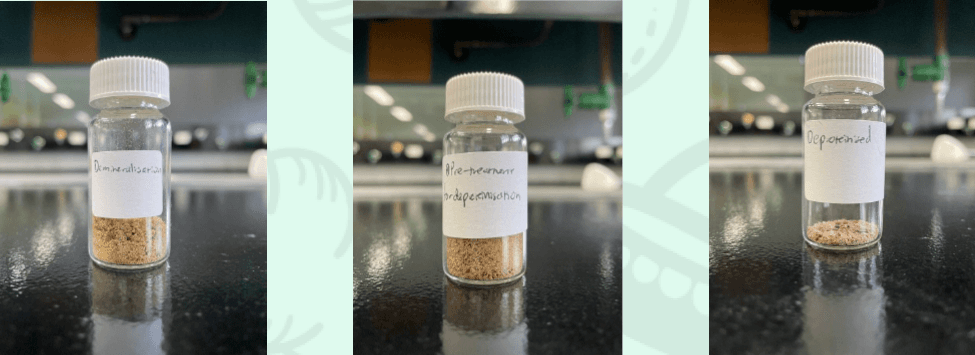
We were provided with an extraction protocol that had been developed by others, but had not been tested. Over the course of approximately two weeks, this protocol was tested, with samples being taken for analysis at each step and notes made where either information was missing or improvements could be made from the transition between a theoretical protocol to one that works in practice.
Throughout the completion of the protocol, we had to adapt quickly to issues we faced, such as samples not drying as they should or solutions not filtering correctly due to the chitin forming what we hypothesise to have been a hydro-gel-like substance. This was a great opportunity to help us develop our critical thinking and problem-solving skills.
Results and Characterisation
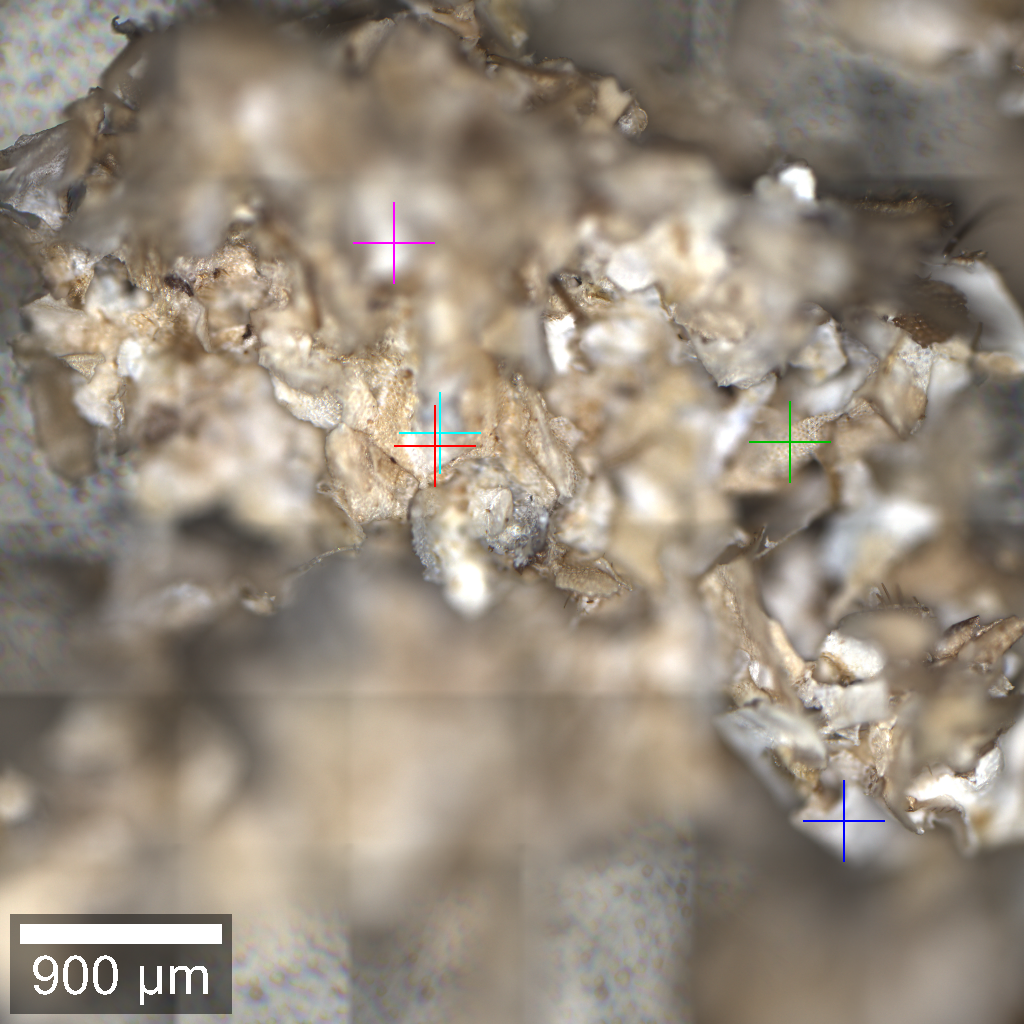 Once the protocol was finished and we had collected all our samples, we made use of Fourier Transform Infrared Spectroscopy, Raman Spectroscopy, and X-Ray Diffraction spectroscopy to characterise our samples. The spectrums that we obtained from each of these techniques were first compared across the course of the protocol to see how each step influenced the product. Following on from this, the spectra were then compared to literature examples with known chitin. As a result of this, along with some additional calculations, we were able to confirm the successful extraction of chitin from the black soldier fly meal, with our final sample being made up of roughly 47.32% chitin, up from the 10.52 % make-up of the original defatted meal.
Through our project with Mobius Farms, we were able to not only validate the protocol, but also provide them with some key information regarding improvements to be made, and steps that can be taken to upscale and commercialise this process.
Blog Authors: Flinders University Science Connect Project Team: Will Grosser, Kiara Tickle, Ryan Steel, Jye Lemmers, and Sarah Klenk
A note from Mobius Farms
We thoroughly enjoyed our experience of working with the team at Flinders University and the Science Connect program. Initially, due to the short duration of the Science Connect program (8 weeks), we expected the students may be able to conduct a literature review and make recommendations on extraction protocols. Due to the students’ enthusiasm for the project, and the support of Dr Sara Miller, Lecturer in Analytical Chemistry and lab supervisor, the students were able to validate a given protocol in the laboratory. This was valuable first-hand experience for the students in working with a diverse range of unknowns and troubleshooting on the run.
The students invested far more hours in the lab than planned just to ensure they were able to deliver outcomes to their customer, Mobius Farms. Their final report and presentation were thoroughly researched and well presented. Mobius Farms look forward to an ongoing relationship with Flinders University students to further this initial research.
We strongly encourage other businesses to engage with the Science Connect program to provide students with “real world” experiences and connections. It is a win-win for students and for industry to be able to share knowledge, experiences and mentor students on their science and engineering journeys.
Science Connect – Flinders University