Introduction
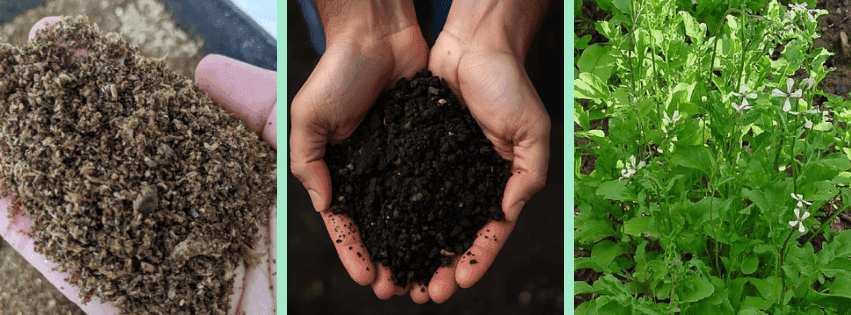
Through Flinders University’s Science Connect program, our team partnered with Mobius Farms to investigate how sustainable soil amendments could improve plant growth and soil properties. Two solutions that we investigated were biochar, a carbon-rich material that improves soil structure and nutrient retention, and black soldier fly frass, a nutrient-rich organic fertiliser containing beneficial microbes.
While both sources have shown benefits individually, emerging research suggests they may work even more effectively together. Biochar’s porous structure can act as a carrier for frass nutrients and microbes, potentially enhancing nutrient availability and supporting a healthier soil ecosystem. To test this, we grew rocket (Eruca sativa) seedlings in both ‘high’ and ‘low’ nutrient soils, comparing biochar and frass alone, as well as different combined ratios.
Background Information
Sustainable horticulture focuses on efficient, high-quality food production while maintaining soil health. Unlike traditional fertilizers, a combination of biochar and frass can be used as sustainable soil amendments:
- Biochar: A stable, carbon-rich product created by heating plant matter without oxygen. It improves water and nutrient retention. Studies suggest that areas with less plant biomass (like vineyards) possess less stored carbon; biochar application here can significantly increase soil fertility.
- Frass: Produced from Black Soldier Fly Larvae, this is a nutrient-rich fertilizer containing beneficial microorganisms and chitin, which can enhance a plant's immune system.
Despite many positive effects, both amendments require careful consideration regarding feedstock selection and production protocols to ensure quality and avoid contaminants before future commercialisation.
Our Study
To investigate whether biochar and frass worked better separately or together, we tested the growth rates of rocket seedlings. The biochar was sourced from Schutz Winery (2025 vineyard cuttings) and used in a fine dust form, while the frass was sourced from Mobius Farms’ own colony.
Our study design utilized two main soil treatments:
- Low Nutrient Soil: A 1:1:1 ratio of potting mix, coir peat, and vermiculite.
- High Nutrient Soil: A 2:1:1 ratio of Osmocote compost, potting mix, and vermiculite.
We tested various ratios, including a control group, frass-only (10% volume), biochar-only (20% volume), and combined mixtures at 10%, 20%, and 50% volume. We “loaded” the biochar by soaking it with frass in water for 2 hours prior to planting. Over seven weeks, we measured shoot height, leaf colour, root length, and soil nutrient composition.
Key Findings
The results determined that the rocket plants grown in low nutrient soil with the 10% biochar and frass mixture had the highest growth rate, reaching 43 cm. Conversely, plants in high-nutrient soil with the 50% mixture had the lowest growth rate (23 cm).
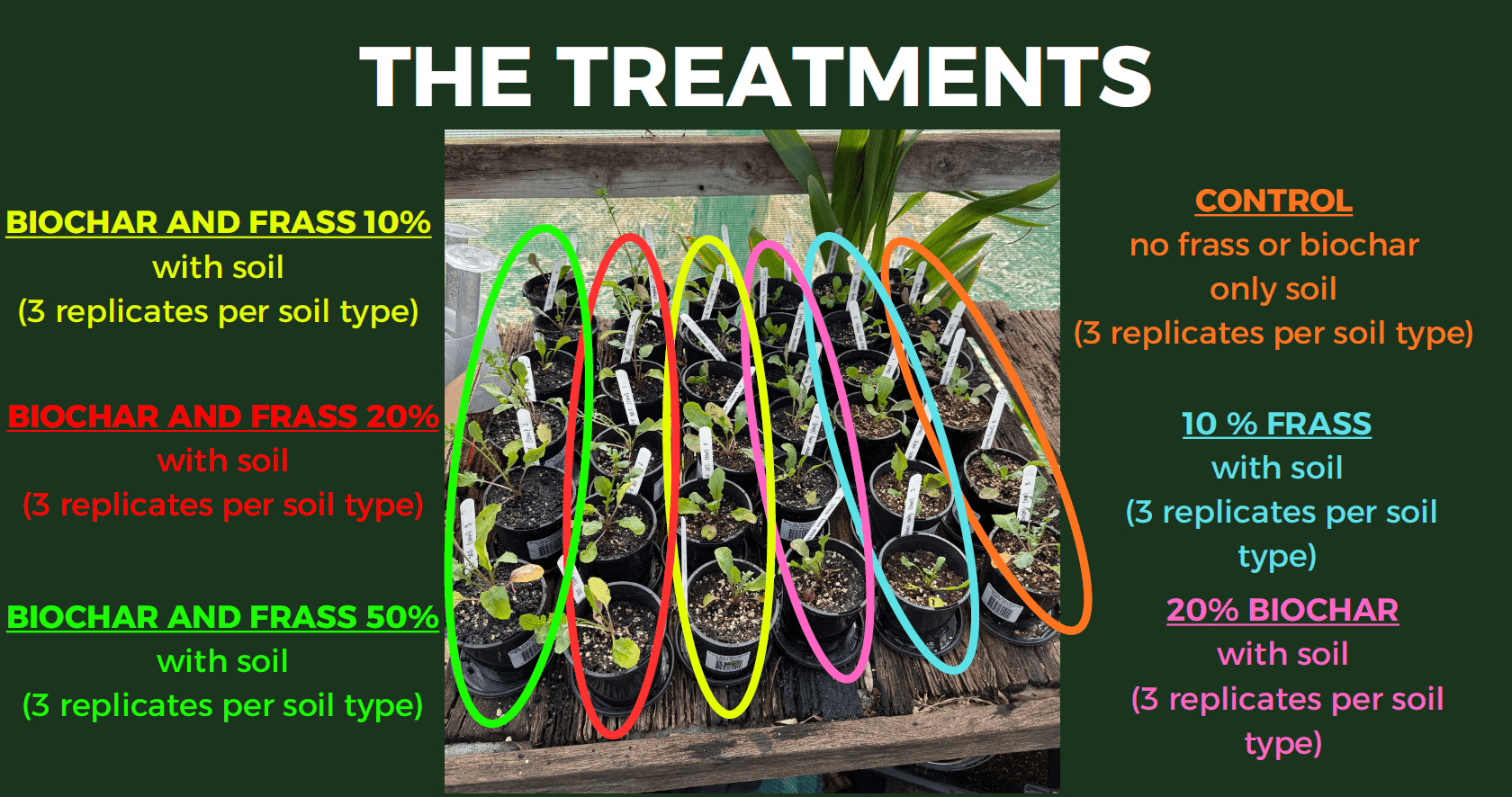
Interestingly, stress flowering was observed in almost all treatments except for the high-nutrient frass-only and 50% combined treatments, which appeared the healthiest despite slower vertical growth. We identified several limitations for future study, including the need for a fully controlled greenhouse environment and germinating from seeds to ensure initial plant consistency.
Conclusion
Overall, our experiment showed that biochar and black soldier fly frass have a positive effect on growth, but the results are highly dependent on the existing nutrient content of the soil and the application rate. While we initially hypothesised a 20% mixture would perform best, the 10% treatment in low-nutrient soil proved to be the most effective balance. This strategy represents a promising step in Mobius Farms' dedication to circular and sustainable soil solutions.
Links: